Petra Hansen · 23 October 2026
Unlocking the Past: Digitized Archives Spur Fresh Approaches to Historical Inquiry at Polish Universities
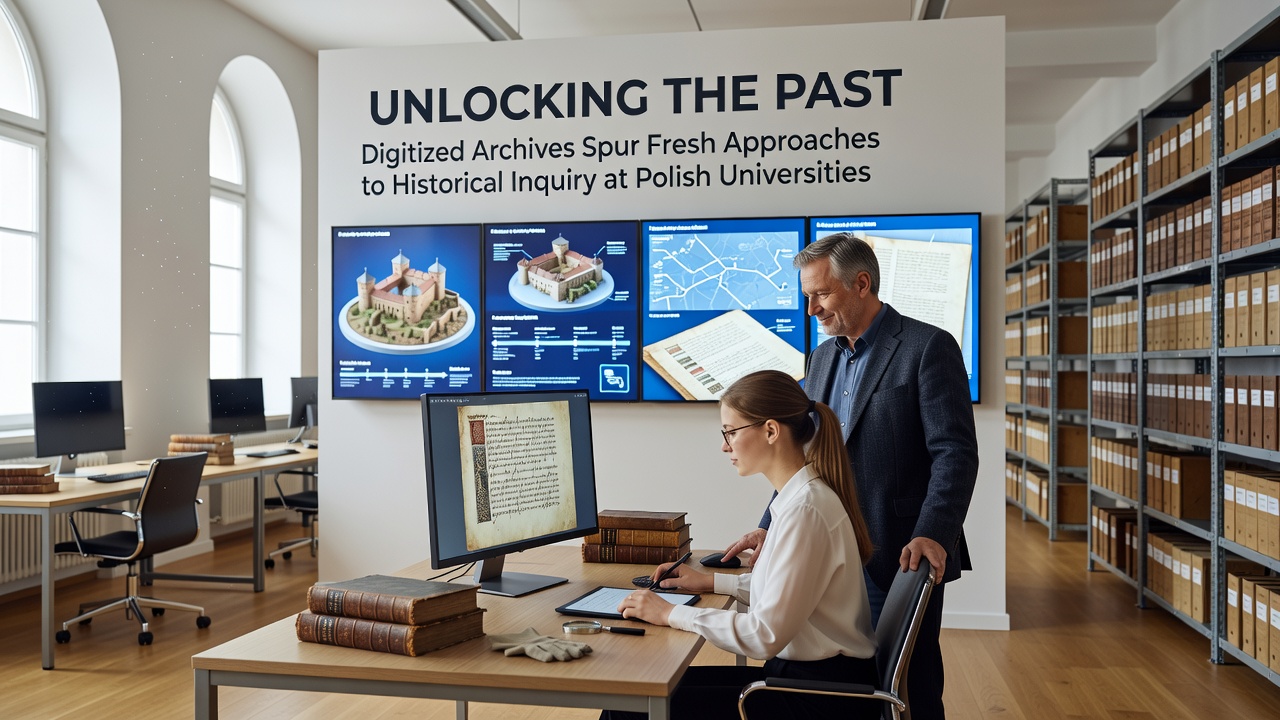
Polish universities have expanded access to historical records through large-scale digitization projects that connect scholars with primary sources once locked behind physical barriers, and these efforts gained momentum as institutions integrated digital platforms into daily research workflows. Data from multiple academic centers shows that digitized collections now cover materials ranging from medieval manuscripts to 20th-century administrative files, which allows teams to apply computational methods such as text mining and network analysis without traveling to distant repositories.
Expansion of Digital Collections Across Institutions
Universities in Warsaw, Kraków, and Wrocław have coordinated with national archives and regional libraries to scan and catalog millions of pages, while projects funded through European Union programs have supplied the infrastructure needed for long-term storage and metadata standardization. Observers note that these partnerships produced searchable databases covering topics like the partitions of Poland, interwar diplomacy, and postwar reconstruction, which researchers now cross-reference with international holdings in real time.
One project at the University of Warsaw completed digitization of over 1.2 million documents by mid-2025, and similar initiatives at Jagiellonian University added another 800,000 items focused on Central European diplomacy. Those numbers continue to grow as October 2026 approaches and several consortia prepare to release updated interfaces that incorporate AI-assisted transcription for handwritten Polish and Latin texts.
New Research Methods Emerging from Digital Access
Historians have shifted from traditional close reading toward mixed-method approaches that combine quantitative mapping of archival data with qualitative interpretation, and this change has produced studies on migration patterns, economic networks, and cultural exchange that draw on datasets spanning multiple centuries. Researchers at several institutions report that tools for georeferencing old maps and linking them to census records have revealed previously undocumented trade routes between Polish cities and Baltic ports.
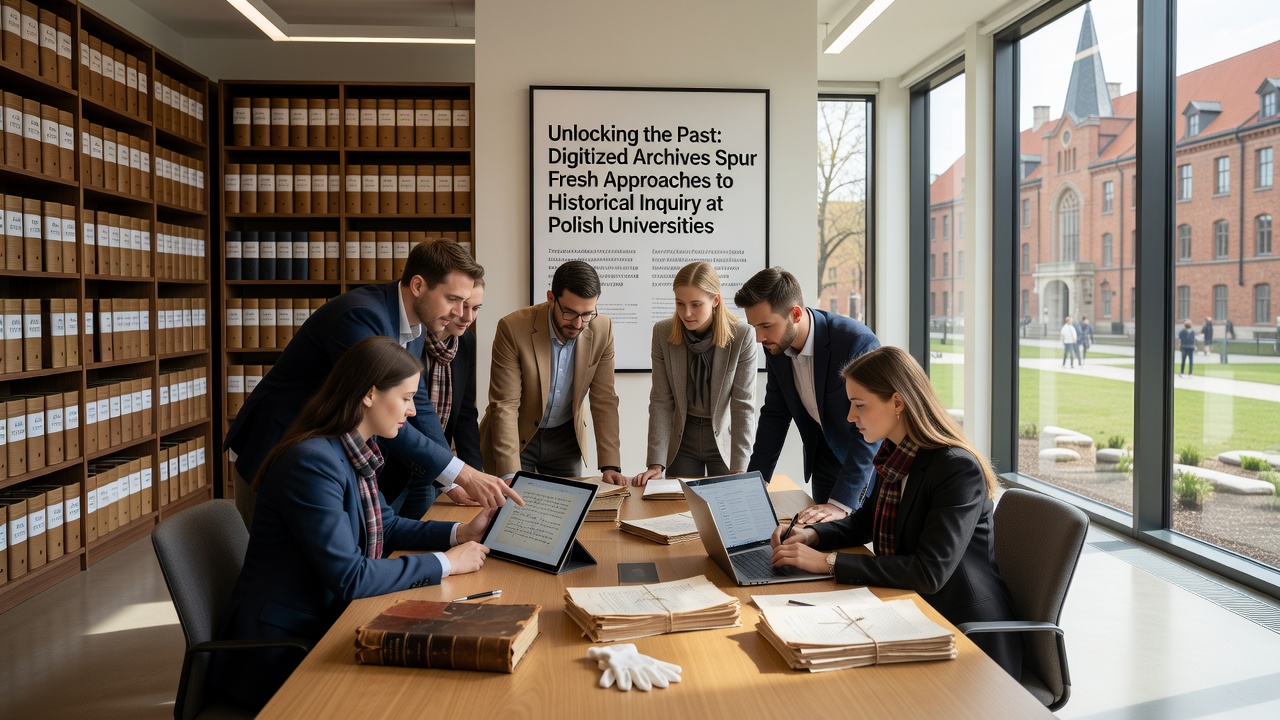
Take one team at Adam Mickiewicz University in Poznań that applied graph analysis to correspondence collections from the 18th century; the group identified clusters of intellectual exchange that traditional archival visits had overlooked. Another group at Nicolaus Copernicus University in Toruń used optical character recognition to process 19th-century newspapers, which yielded measurable shifts in public discourse around industrialization that align with findings from European Commission digital heritage initiatives.
Training and Collaboration Structures
Graduate programs now include dedicated modules on digital humanities methods, and faculty across departments have formed working groups that share best practices for data cleaning and ethical use of personal records from earlier periods. These structures support joint publications and conference presentations, while visiting scholars from North American and Asian institutions have participated in workshops that demonstrate how Polish digitized collections fit into broader global histories.
Figures released by the Polish Ministry of Science and Higher Education indicate that more than 450 researchers attended training sessions on archival databases during 2025, and enrollment in related certificate programs has risen steadily. External partnerships with organizations such as Europeana have supplied standardized vocabularies that improve cross-border search results and reduce duplication of effort.
Challenges in Implementation and Access Equity
Despite rapid progress, institutions still face questions around long-term preservation formats, copyright clearance for 20th-century materials, and equitable access for scholars outside major cities who lack high-speed connections. Several universities have responded by creating mobile-friendly interfaces and regional access points that allow researchers in smaller towns to query the same collections available in capital libraries.
Observers point out that metadata gaps remain for records produced during periods of political upheaval, yet ongoing community transcription projects have begun to fill those voids through crowdsourced efforts coordinated by academic libraries. These initiatives draw on volunteer networks that include both professional historians and local history enthusiasts.
Conclusion
Digitized archives at Polish universities continue to reshape historical inquiry by lowering barriers to primary sources and enabling analytical techniques that were impractical only a decade ago. As October 2026 nears, scheduled platform upgrades and new cross-institutional agreements are expected to expand the range of available materials further, which will support continued experimentation with computational approaches while maintaining rigorous standards for source verification and contextual interpretation. The infrastructure already in place provides a foundation for sustained collaboration across disciplines and borders.